
(*) Islas de Gigantes Island Hopping Tours, Travel Packages, Resorts & Hotel Accommodation, with Money‑Saving Budget Tips
Explore flexible itineraries, resort hotels, scenic routes, and top attractions across Islas de Gigantes. Plan your Carles, Iloilo getaway with practical travel guidance and money-saving tips for a smoother island-hopping experience.
[ADS]
* Book Now, Pay Reservation Later, Balance on Your Tour Date. Terms and Conditions Apply. Subject to Availability.
Historically known as Islas de Gigantes and now more commonly referred to as Gigantes Island—with other name variations including Isla Gigantes and the Higantes Group —Gigantes Island Iloilo is a group of inhabited islands, beaches, limestone formations, lagoons, viewpoints, and small islets off the coast of Carles in northern Iloilo. It is not a single resort island that visitors can explore entirely by road. Most sightseeing happens by boat, and every trip must be coordinated with the mainland transfer, port procedures, weather, tides, and the route approved for the day. This guide gives first-time travelers a realistic overview of access, tours, accommodations, cash needs, safety, and itinerary planning.
What and Where Is Gigantes Island?
Gigantes Island refers to the island group within the municipality of Carles, Iloilo. Gigantes Norte and Gigantes Sur are the two principal inhabited islands, while many of the photographed stops are smaller islands or islets reached by tour boat. This geography explains why visitors should not expect one continuous road route linking every beach, lagoon, cave, lighthouse, and viewpoint.
The destination faces the Visayan Sea and remains closely connected to fishing communities. Passenger boats, tourism vessels, local homes, working shorelines, seafood production, and changing marine conditions all form part of the visitor experience. Travelers should ask before photographing residents, fishing activities, private homes, or children, and they should avoid blocking areas where boats and supplies are being handled.
Local tourism materials and tradition connect the name “Gigantes” with stories of unusually large human remains, jars, and wooden coffins reportedly found in caves. These accounts are part of the destination’s folklore and tourism narrative, not a reason to enter caves without permission or remove objects. Visitors should follow approved routes and leave shells, coral, rocks, plants, sand, wildlife, and archaeological-looking materials where they are found.
Why Gigantes Island Iloilo Appeals to Travelers
The strongest reason to visit is the variety packed into a boat route. Depending on the confirmed itinerary and safe access, a traveler may climb a compact island viewpoint, walk on a sandbar, enter a limestone-framed lagoon, swim near a beach, snorkel in a crew-approved area, and share a seafood lunch in one day. Those searching for things to do in Gigantes Island should begin with the full guide to Gigantes Island attractions instead of assuming that one tour includes every place advertised online.
Officially promoted destinations include Tangke Lagoon, Cabugao Gamay Island, Cabugao Dako Island, Bantigue Island and Sandbar, Antonia Point, Ojatras Island or Pulupandan, Mini Boracay or Calumpang, Tinagong Bay-Bay or Dakong Bay-Bay, the Century-Old Lighthouse, Sicogon Island, Tumaquin Islet, Mt. Opao, and Sicogon’s Lagoon Eco-Trail. The list describes the wider tourism area; it is not a guaranteed one-day checklist. Tide, trail condition, private-property rules, passenger pace, daylight, vessel availability, weather, and maritime clearance can alter access.
Cabugao Gamay Island
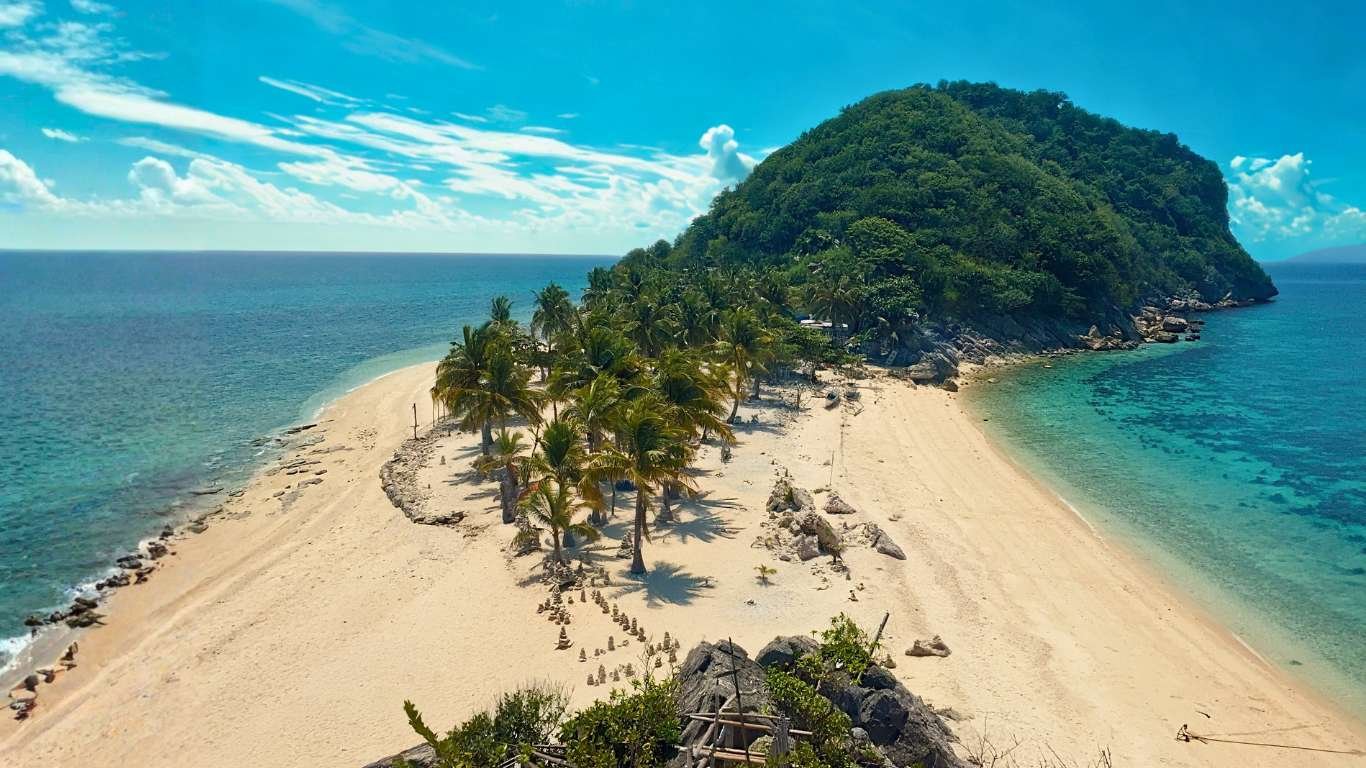
Cabugao Gamay Island is the destination’s most recognizable photo stop because of its narrow beach, limestone ends, coconut trees, and elevated viewing area. The climb is short but can be steep, crowded, hot, or slippery. Wear secure footwear, wait for space at the viewpoint, and do not step toward unstable edges merely to avoid other people in a photograph.
As one of the top Iloilo attractions, it has also become a visual symbol of Iloilo tourism online; searches for Iloilo or Gigantes Islands frequently feature photographs of Cabugao Gamay
Featured at No. 14 in a 2016 Forbes article presenting Beautiful Destinations’ list of 20 of the world’s most beautiful places, Cabugao Gamay is one of the most iconic and one of the must-visit Iloilo tourist spots.
Tangke Lagoon and Tide-Dependent Access
Tangke Lagoon is enclosed by dramatic limestone walls, but its water depth, appearance, and accessibility change with tides and sea conditions. A calm image posted online does not guarantee the same conditions on another date. Enter only when the captain or guide permits it, supervise children closely, and avoid climbing sharp or wet limestone.
Bantigue, Antonia Point, and Snorkeling
Bantigue Sandbar changes shape and width with the tide. Antonia Point, commonly marketed as Antonia Beach, may offer swimming or snorkeling when water conditions suit the group’s ability. The “best snorkeling spot” is the place approved by the crew on the travel date—not simply the clearest-looking water. Notify the guide before entering, use a flotation device when advised, never stand on coral, and do not chase marine animals.
How to Get to Gigantes Island
Travelers researching how to get to Gigantes Island should plan four connected stages: arrival in Iloilo or Roxas, an overland transfer to Carles, tourism procedures at the official mainland gateway, and the final boat journey or island-hopping route. Skipping any stage in the booking conversation can lead to missed pickups, unexpected fees, or confusion over where the package actually begins.
Carles, Iloilo is the principal mainland gateway. Under Municipal Ordinance No. 2016-03, Bancal Port in Barangay Bancal is designated as the official entrance and exit point for the municipality’s island destinations. Visitors normally report through the tourism area, provide accurate passenger details, complete the current Tourism Pass or registration procedures, settle documented charges, attend any required briefing, and wait for boarding instructions and maritime clearance.
| Travel stage | Approximate distance | What travelers should allow for |
|---|---|---|
| Iloilo City to Carles | About 146–147 km by road | Traffic, pickup coordination, road conditions, meal or restroom stops, and the operator’s reporting deadline |
| Roxas City to Carles | About 70 km by road | Availability of direct transfers, public-transport connections, luggage, and arrival margin |
| Bancal Port to Langub Port | About 18 km by sea | Vessel type, loading, wind, waves, tide, port procedures, and the safe route selected that day |
| Island-hopping circuit | Varies by route | Stop sequence, swimming time, lunch, passenger pace, daylight, and any safety-driven changes |
Using Iloilo City as the Main Base
Iloilo City is convenient for flights, hotels, banking, pharmacies, restaurants, and organized transfers. Read the Iloilo City travel guide if you plan to combine the islands with Jaro, Molo, Calle Real, La Paz food stops, or the river esplanade. Northern and southern Iloilo tourist spots are far apart, so Miagao Church or Garin Farm is usually better placed on a different day from the long journey to Carles.
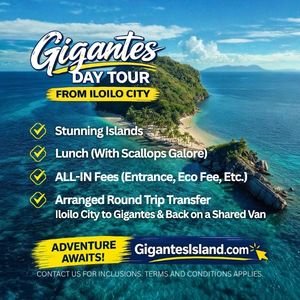
A Gigantes Island day tour from Iloilo City normally requires a pickup before dawn and a late return. Confirm whether the quoted rate includes round-trip city transfer, hotel pickup, port procedures, boat service, guide or coordinator, lunch, entrance charges, and the final drop-off. Do not schedule an evening flight, ferry, cruise departure, or important appointment on the same day.
Using Roxas City, Boracay, Bacolod, or Cebu
Roxas City is geographically closer to Carles, although onward public transport may be less straightforward than a prearranged vehicle. Travelers combining Boracay and Gigantes should treat the overland journey across Panay as a major transfer stage rather than a short side trip. Those arriving through Bacolod or Cebu should verify every airport, pier, ferry, and road connection separately and build a contingency day when tickets are not protected under one booking.
There is no major commercial airport on the islands. The site’s flights to Gigantes planning guide compares Iloilo, Roxas, Kalibo, and Caticlan as possible gateways. A late flight followed by a predawn van and a full boat day can be exhausting, especially for children, older adults, or travelers prone to motion sickness.
Bancal Port Carles Iloilo Procedures
Bancal Port Carles Iloilo is more than a place where a boat happens to be waiting. It is the centralized gateway where current tourism and passenger procedures are coordinated. Groups should submit correct names in advance and carry identification matching the booking. Save the meeting-point photo, operating-provider details, payment record, passenger list, and emergency contacts offline because mobile data may weaken at the port or on the water.
A September 2025 guide published a passenger fare and scheduled departures between Bancal and the islands. Treat those figures only as dated context. They do not replace a confirmed booking for the exact travel date, and a passenger boat is not automatically an island-hopping service. Reconfirm the current operator, departure point, fare, baggage policy, vessel availability, destination, and reporting time.
Parking, toilets, seating, food, drinking water, and luggage storage should be confirmed rather than assumed. Boarding conditions can change with tide, vessel position, and crowding. Keep both hands free, accept assistance from the crew, keep children beside a responsible adult, and avoid bringing a large hard-shell suitcase onto a small tour boat when secure mainland storage is available.
Islas de Gigantes Island Tour
A Gigantes Island tour may be shared or private. Shared departures are usually more economical and follow the group’s reporting and pacing rules. Private service gives the booking group more control over timing and passenger composition, but it does not override a closed attraction, unsafe sea condition, port instruction, or the captain’s authority.
Tour A and Tour B are operator-defined labels rather than standardized official routes. Tour A is commonly more boat-focused, while Tour B may combine marine stops with Gigantes Sur attractions such as the 360 Viewpoint, Pahuwayan Landscape, or the Dragon Fruit Farm. Combined Sicogon routes may require an earlier departure, minimum participants, and favorable conditions across a wider area.
Before paying for a Gigantes Island tour package, request the written stop list, meeting point, reporting time, boat type, passenger limit, life-jacket arrangements, meals, dietary procedure, entrance and environmental charges, transport coverage, exclusions, payment schedule, cancellation rules, refund or rebooking policy, and weather terms. Compare Gigantes Island tour packages by actual touring time and inclusions—not only by the headline price or total pickup-to-drop-off duration.
Shared Versus Private Service
Shared groups should ask what happens when the minimum number of guests is not reached or when another passenger arrives late. Private groups should confirm whether the price is per boat, whether group size affects the rate, and what maximum capacity applies. Children and infants still require safe passenger planning and correctly sized life jackets even when a seller offers a discounted rate.
Packages and Written Inclusions
Gigantes Island packages may combine the boat, coordinator, lunch, environmental charges, entrance fees, accommodation, breakfast, and land transfers, but sellers use the word “package” differently. Check whether the service begins at Bancal, mainland Carles, Iloilo City, Roxas City, the airport, or a hotel. Ask whether drinking water, towels, snorkeling masks, porterage, insurance, room taxes, extra-person charges, and optional stops are excluded.
Isla Gigantes Island Hopping and Boat Safety
Gigantes Island hopping involves repeated boarding, open-water travel, sun exposure, sea spray, and landings that may require stepping into shallow water. Wear the provided life jacket while underway and follow crew instructions even when the sea looks calm. Keep both hands available when entering or leaving the boat instead of carrying a phone, bag, and footwear all at once.
Use quick-drying clothing, secure sandals or water shoes, a hat that will not blow away, and a light long-sleeved layer. Protect phones, identification, medicine, batteries, and booking records in separate waterproof pouches. A dry bag reduces risk but should not be treated as permission to leave valuables unprotected inside a wet boat.
People prone to motion sickness should take their usual preventive measures before departure and sit where the crew recommends. Medication that causes drowsiness should be used only according to professional advice and personal experience. Tell the guide when symptoms become serious rather than waiting until the boat is already far from the next safe landing.
Planning a Gigantes Island Day Tour
A Gigantes Island day tour is appropriate for visitors who want several major stops without sleeping on the islands. A realistic schedule includes registration, briefing, boarding, travel between attractions, swimming or photo time, lunch, and the return to port. A list with many stop names is not necessarily better if the group spends the entire day rushing.
Arrive already dressed for swimming or an easy change because small stops may have limited changing facilities. Carry a towel, dry clothes, drinking water, sunscreen, medicine, and a waterproof bag. Parents should ask whether the route includes steep steps, exposed viewpoints, slippery trails, deep water, or places without railings.
A useful Gigantes Island itinerary protects the evening after the tour. Road traffic, passenger delays, weather, port congestion, and route changes can push back the return. Travelers who need a gentler schedule should stay in mainland Carles the night before, join the tour after proper rest, and either remain another night or continue only with a flexible transfer.
Where to Stay: Hotels, Resorts, or Island Rooms
Searches for Gigantes Island hotels often mix mainland Carles properties with rooms on Gigantes Norte, Gigantes Sur, and Sicogon. These locations are not interchangeable. A booking should identify the barangay, map pin, road or boat transfer, check-in process, and estimated travel time to the exact reporting area.
Gigantes Island resorts range from mainland beach properties with easier road access to small island accommodations that may depend on generators, stored freshwater, and scheduled supply boats. Do not assume that “resort” means the same room standard, utility reliability, medical access, or service level found in Boracay or a large city.
Confirm air-conditioning or fan availability, generator hours, charging outlets, water supply, private or shared bathroom, meals, breakfast timing, mobile networks, room taxes, bedding, child arrangements, emergency procedures, and late check-in. A beachfront location does not guarantee safe swimming at every hour. Ask about currents, rocky areas, tide effects, boat lanes, barriers, and whether a marked swimming zone or lifeguard exists.
Travelers who want an early departure may compare hotels near Bancal Port, but “near” should be verified through actual road time and confirmed early transport. Map pins can point to the wrong entrance or make a shoreline property appear closer than it is. Secure luggage storage is valuable when guests check out before joining the boat tour.
Best Time to Visit Gigantes Island
Travelers asking for the best time to visit Gigantes Island usually prefer the generally drier months, often from late November through May. Seasonal averages are useful for broad planning, but no month guarantees a calm sea, clear lagoon, exposed sandbar, or complete route. Local thunderstorms, wind, swell, poor visibility, and maritime advisories can cancel or shorten a trip even during a traditionally favorable period.
Check the operator’s update before leaving Iloilo City or Roxas City and reconfirm on the morning of departure. Conditions observed inland may not match the full sea route. A sunny forecast is not maritime clearance, and social-media photos from the previous day are not evidence that every stop will remain open.
Cash, Cards, ATMs, and Mobile Signal
Do not rely on finding a working ATM at Bancal or on the islands. Complete large withdrawals, foreign exchange, card concerns, and other full-service banking in Iloilo City, Roxas City, or another major center. The site’s guides to an ATM near Gigantes, banks near Gigantes, and a money changer in Carles explain why availability, branch cash, connectivity, and operating hours must be reconfirmed.
Carry Philippine pesos in small denominations for legitimate excluded charges, snacks, local transport, and small purchases. Divide cash between secure locations and seal an emergency reserve against water. GCash and other electronic payments may be accepted by some merchants, but signal, wallet limits, one-time passwords, merchant cash availability, and service outages make mobile payment an unreliable sole option.
Download booking confirmations, identification copies, accommodation details, meeting-point photos, emergency contacts, and maps before leaving the mainland. Mobile signal and electricity may vary by island and property. A screenshot stored on the phone is often more dependable than a cloud document that cannot load at the port.
Food, Seafood, and Local Etiquette
Fresh seafood is central to the Carles visitor experience, and shared lunches may include scallops, fish, shellfish, rice, vegetables, and simple local dishes. Communicate allergies, vegetarian needs, religious restrictions, and medically necessary diets before the service date. Remote kitchens may not have substitute ingredients, and severe allergies require specific discussion about sauces, broth, utensils, and cross-contact.
Tipping is voluntary rather than a fixed requirement. A modest direct tip is appreciated when a boat crew, guide, driver, or meal team provides attentive service. It should not replace official or agreed fees. When buying from small vendors, avoid aggressive bargaining over very small amounts, and keep purchases away from coral, shells, wildlife products, or other materials removed from the environment.
Practical Checklist Before Arrival
- Verify the actual tour provider, boat operator, transfer provider, and accommodation rather than relying only on a social-media page name.
- Get the meeting point, reporting deadline, pickup window, return drop-off, and emergency contacts in writing.
- Confirm whether tourism registration, Tourism Pass, environmental fees, entrance fees, meals, water, and transfers are included.
- Read the cancellation, refund, rebooking, shortened-route, minimum-passenger, and late-arrival rules before paying.
- Carry identification matching the passenger list and save essential records both offline and in waterproof storage.
- Bring sufficient Philippine pesos, small bills, and a separate emergency reserve.
- Pack prescription medicine plus a delay allowance, basic first aid, water, sun protection, and motion-sickness supplies.
- Use secure footwear for wet landings, uneven shores, hot trails, and slippery viewpoints.
- Bring a towel, quick-drying clothing, a dry change, and waterproof pouches for electronics and documents.
- Disclose mobility limitations, pregnancy, heart conditions, severe motion sickness, food allergies, or other relevant needs before booking.
- Leave enough time after the trip for weather, traffic, and port delays; avoid fixed evening connections.
Suggested Travel Plans
One Long Day From Iloilo City
This plan combines a predawn transfer, Bancal procedures, a boat route, lunch, and a late road return. It works for travelers with limited time who can tolerate a physically demanding day. Keep the evening free and avoid arriving on a late flight the night before.
Two Days With a Mainland Carles Overnight
Travel north on the first day, purchase supplies, verify the reporting area, and sleep near the arranged pickup. Join the tour the next morning after proper rest. This is often more comfortable for families, older adults, and visitors carrying luggage.
Three Days With an Island Stay
Use the first day for the mainland and boat transfer, the second for the principal sightseeing route, and the third for the return. Confirm meals, electricity, bathroom setup, room category, boat transfers, and whether sightseeing is included separately. Staying on an island does not automatically include a complete tour.
For a more detailed plan, read the Gigantes Island travel guide and the broader Gigantes travel planner. Gigantes Island Iloilo rewards travelers who prepare carefully but remain flexible: the goal is not to force every advertised stop into one day, but to enjoy the safest route available while respecting the sea and the communities that live there.
Book your Gigantes Island Hopping at GigantesIsland.com/book or visit Frequently Asked Questions (GigantesIsland.com/frequently-asked-questions) to learn more.
Plan your Gigantes escape with practical tips on Iloilo transfers, Bancal Port, island hopping, tours, stays, weather, cash, and boat safety.
Money-Saving Tips for Budget Travelers
A trip to Islas de Gigantes does not have to be expensive, but the lowest advertised price is not always the cheapest option after transportation, meals, entrance fees, and other exclusions are added. Budget travelers can save more by comparing the total cost of the trip, choosing the right starting point, booking only the services they need, and avoiding preventable expenses caused by missed transfers or unclear package inclusions.
Use Travel Credit Cards for Flights and Hotels
Travelers who already use a travel credit card may earn points, airline miles, cashback, or other rewards when booking flights and hotels in Iloilo. Depending on the card, eligible purchases may also include airport transportation, dining, and other travel expenses. These rewards can help reduce the cost of future flights, hotel stays, seat upgrades, or related travel purchases.
Compare the card’s earning rate, annual fee, foreign-transaction charges, reward-expiration rules, and redemption requirements before booking. Some cards provide additional travel benefits, such as complimentary airport-lounge access, baggage protection, purchase protection, or travel insurance, but coverage and eligibility conditions vary by issuer.
Use a travel credit card only for expenses already included in the trip budget, and pay the balance in full by the due date whenever possible. Interest, late-payment charges, and cash-advance fees can easily exceed the value of any points, miles, or rewards earned. Keep the booking confirmation and card receipt until the flight, hotel stay, and island tour have been completed.
Consider Travel Insurance for Weather and Trip Disruptions
Travel insurance can provide additional financial protection when booking flights, hotels, transfers, and island activities, particularly during the rainy or typhoon season. Bad weather may cause flight delays, cancellations, missed connections, suspended boat operations, or unexpected hotel and transportation expenses in Iloilo and other parts of the Philippines.
Before purchasing a policy, check whether it covers trip cancellation, trip interruption, flight delays, missed connections, baggage delays, emergency medical treatment, medical evacuation, and water-based activities. Coverage differs substantially between policies, and some plans exclude foreseeable weather events, pre-existing medical conditions, high-risk activities, or losses caused by booking changes that were not covered under the policy terms.
Purchase coverage early enough to satisfy the insurer’s eligibility requirements, and make sure the insured travel dates include the entire trip from departure until the final return. Keep copies of the policy, emergency-assistance number, receipts, airline notices, hotel records, and written cancellation or delay confirmations. A policy does not prevent disruptions, but suitable coverage may reduce the financial impact when flights, accommodations, transfers, or tours cannot proceed as planned.
Compare the Total Package Cost, Not Only the Advertised Price
Before choosing among Gigantes Island packages, request a complete written list of inclusions and exclusions. A low headline rate may cover only the boat tour from Bancal Port, while another package may already include transfers from Iloilo City, lunch, tourism registration, environmental charges, entrance fees, and a guide or coordinator.
Calculate how much you would spend after adding every required service. Check whether the rate is per person, per boat, per room, or based on a minimum number of guests. Solo travelers and small groups may pay more when the advertised price assumes that several passengers will share the boat and land-transfer expenses.
- Ask whether round-trip transportation to Carles is included.
- Confirm whether lunch, drinking water, and snacks are provided.
- Check which tourism, environmental, and entrance fees are included.
- Ask whether snorkeling equipment, towels, and dry bags are included or available for rent.
- Verify whether the price changes if the minimum number of passengers is not reached.
- Request the cancellation, refund, rebooking, and bad-weather terms before paying.
Choose a Shared Tour When It Matches Your Schedule
A shared Gigantes Island tour is usually more economical for solo travelers, couples, and small families because the boat, guide, and other operating costs are divided among several passengers. However, shared tours normally follow a fixed reporting time, route, and group pace. Confirm the minimum passenger requirement and what happens if the scheduled departure does not receive enough bookings.
A private boat may become cost-effective for a larger family or group of friends because the total price can be divided among more travelers. Compare the per-person cost of both options rather than assuming that a shared tour is always cheaper.
Decide Whether to Start From Iloilo City or Stay in Carles
A Gigantes Island day tour from Iloilo City can save the cost of an additional hotel night because the round trip is completed in one day. However, it usually involves a predawn departure and a late return. Make sure the package already includes the city-to-Carles transfer; otherwise, separate transportation can significantly increase the final cost.
Staying overnight in mainland Carles may be more economical for travelers arriving from Roxas City, northern Panay, Boracay, or another nearby destination. It can also reduce the risk of missing the tour because of delayed public transportation. Compare the combined cost of accommodation and local transport with the price of a full round-trip transfer from Iloilo City.
When searching for hotels near Bancal Port, verify the actual travel time to the tourism registration area. A cheap room located far from the port may require an expensive early-morning tricycle, van, or private transfer.
Travel With a Group and Divide Fixed Expenses
Many boat and transfer expenses are fixed or partly fixed, so traveling with relatives or friends can reduce the cost per person. A group may be able to divide the cost of a private van, private boat, accommodation, and local transportation. Before confirming, ask for the maximum legal passenger capacity and make sure every traveler is included in the official passenger list.
Do not accept an overloaded boat or vehicle simply to reduce the price. Saving money should never come at the expense of life jackets, legal passenger limits, safe boarding, or maritime clearance.
Book the Correct Accommodation Location
Search results for Gigantes Island hotels and Gigantes Island resorts may show properties in mainland Carles, Gigantes Norte, Gigantes Sur, or Sicogon. A low room rate can become expensive when a separate boat transfer, meals, or private pickup must be added.
Before booking, confirm the exact barangay, map pin, transfer arrangement, electricity schedule, bathroom setup, meal availability, taxes, extra-person charges, and check-in procedure. For an overnight island stay, ask whether the return boat is included. The phrase “island accommodation” alone does not explain the full cost.
Bring Essential Supplies From the Mainland
Buy personal medicine, sunscreen, toiletries, drinking water, and other essential supplies in Iloilo City, Roxas City, or mainland Carles before boarding. Selection may be more limited and prices may be higher on smaller islands because goods must be transported by boat.
Bring only what you are likely to use. A large suitcase can create storage, porterage, or transfer problems, while a compact waterproof day bag is easier to handle. Refillable water bottles and reusable waterproof pouches may also reduce repeated purchases of disposable items.
Carry Cash in Small Denominations
Withdraw enough Philippine pesos before traveling to Bancal or the islands. ATM access, mobile data, electronic payment systems, and merchant cash availability may be limited. Unexpected cash-out fees or an unnecessary trip to find an ATM can increase the cost of the journey.
Keep smaller bills for legitimate excluded charges, snacks, tricycle fares, and purchases from small vendors. Large bills can be difficult to change. Divide your cash between secure locations and keep an emergency reserve in waterproof storage. Read the guide to finding an ATM near Gigantes Island before leaving a major city.
Avoid Costly Same-Day Connections
Do not schedule a nonrefundable evening flight, ferry, or long-distance bus immediately after the island tour. Weather, tides, passenger coordination, port procedures, traffic, and maritime advisories can delay the return. Missing an onward connection may cost more than adding a flexible travel day or an inexpensive overnight stay.
Budget planning should include a small contingency fund for meals, transport adjustments, weather delays, or an additional night. This reserve can prevent travelers from accepting unsafe arrangements simply because they have no money left for an alternative.
Spend on Safety and Skip Unnecessary Extras
Prioritize a currently authorized operator, appropriate life jackets, safe passenger capacity, reliable transfers, and clear written booking terms. Avoid choosing an unverified seller solely because the offer is cheaper. At the same time, travelers can reduce optional spending by bringing their own towel, reusable water bottle, sun protection, waterproof phone pouch, and properly fitting water footwear.
The best money-saving strategy is to book a package that matches the actual itinerary, group size, starting point, and accommodation needs. A transparent package with the essential fees already included may provide better value than a cheaper offer that requires several unplanned payments during the trip.
